
- Alerts, lists, and dashboards can overwhelm.
- Silence is a design feature.
- AI should work invisibly—surfacing insights only when needed, not constantly notifying.
- Fewer signals increase trust.
Many productivity systems promise to bring order to busy days. In practice, they often add layers of tracking, updating, and monitoring that feel like work themselves. The result is more noise, not more calm. For parents managing family life alongside personal obligations, this additional cognitive load can become one more thing to manage rather than a support that quietly holds the system together.
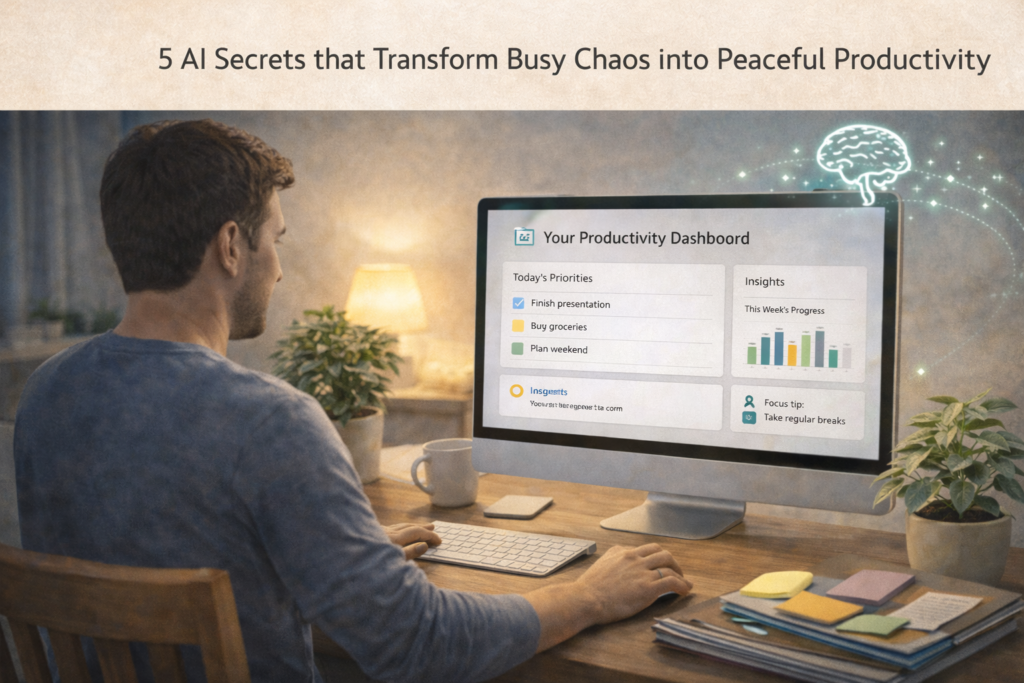
The difference between helpful systems and overwhelming ones often comes down to how information surfaces. Systems that demand constant attention create stress. Systems that work quietly in the background and surface only what matters when it matters allow focus to return to the day itself.
The Noise Problem in Modern Systems
Most productivity tools operate on the assumption that more information creates better decisions. Dashboards display task counts, progress bars, and overdue items. Notifications arrive throughout the day with reminders, updates, and suggestions. Lists grow longer as obligations accumulate across multiple views and categories.
This approach works best when someone has dedicated time to review and process information. In family life, that time often does not exist. Instead, notifications interrupt moments of focus. Dashboards display numbers that increase anxiety without providing clear next steps. The tools meant to reduce mental load can inadvertently increase it by creating new streams of information that require ongoing attention.
Over-Notification
Many systems send alerts for every change, deadline, and milestone. Each notification represents an interruption, pulling attention away from whatever was happening in that moment. Over time, these interruptions accumulate. The mind begins to anticipate them, creating a low-grade vigilance that persists even when notifications are turned off.
Parents often describe a feeling of being “always on alert,” waiting for the next thing that needs attention. When productivity systems contribute to this pattern by sending frequent updates, they reinforce the very stress they were meant to reduce.
Constant Monitoring
Some systems require regular check-ins to remain useful. Tasks need to be marked complete. Progress bars need updating. Categories need sorting. This ongoing maintenance can feel like a second job, one that exists solely to keep the system running rather than to support the work itself.
When energy is already limited, this maintenance burden becomes a barrier. The system begins to feel like an obligation rather than a support, and eventually, it gets abandoned.
Defining “Quiet” AI Systems
A quiet system is one that works without requiring constant interaction. It captures information when it is provided, processes it in the background, and surfaces insights only when they are needed. The default state is silence. Information appears when it is relevant, not on a fixed schedule or in response to every small change.
AI can enable this kind of quiet operation by handling the processing work that would otherwise require manual sorting, categorizing, and prioritizing. Instead of demanding that someone review every task and assign it a priority level, the system can learn from past patterns and surface what is most likely to need attention based on context, timing, and available capacity.
Low Interruption
Quiet systems minimize interruptions. Rather than sending notifications throughout the day, they gather information and present it during moments when someone has chosen to check in. This shift from push to pull changes the relationship with the tool. Instead of the system controlling attention, the person controls when to engage.
Some AI tools can learn when check-ins tend to happen and prepare summaries or suggestions for those moments. This allows the system to anticipate needs without interrupting focus.
High Reliability
For a quiet system to work, it must be reliable. If someone worries that important information might not surface when needed, they will check compulsively to make sure nothing was missed. Trust builds when the system consistently surfaces what matters and filters out what does not.
AI can support this reliability by identifying patterns in what actually requires action versus what can wait or be ignored. Over time, the system becomes better at distinguishing signal from noise, reducing the need for manual filtering.
AI That Works in the Background
Background processing is one of AI’s most valuable contributions to productivity systems. Tasks can be categorized automatically based on content and context. Deadlines can be flagged when they approach but not so far in advance that they create unnecessary anxiety. Related tasks can be grouped without requiring someone to build and maintain complex tagging structures.
This processing happens invisibly. The system does not announce each decision or ask for confirmation on every categorization. It simply organizes information so that when someone does check in, the view is clear and actionable.
Designing for Calm Awareness
Calm awareness means having access to the information that matters without being overwhelmed by the information that does not. It is the difference between a dashboard that displays everything and a view that shows only what needs attention today.
Designing for calm awareness requires intentional decisions about what to show, when to show it, and how to present it. The goal is clarity, not comprehensiveness.
Pull vs Push Information
Push systems send information to you. Pull systems allow you to retrieve information when you are ready. Most productivity tools default to push, sending reminders and notifications throughout the day. Quiet systems default to pull, waiting for you to check in and then presenting what is relevant at that moment.
AI can make pull systems more effective by preparing the right information in advance. When you open the system, it shows what matters now based on time of day, available capacity, and patterns from past behavior. The preparation happens in the background, but the interaction happens on your terms.
Periodic Check-Ins
Rather than constant monitoring, quiet systems work best with periodic check-ins. A morning review to see what the day holds. An afternoon check to adjust plans if needed. An evening close to mark what was completed and set intentions for the next day.
These check-ins become rituals rather than obligations. They provide structure without demanding constant attention. AI can optimize what appears during each check-in, ensuring that morning views focus on immediate priorities while evening views emphasize completion and reflection.
AI Summaries Instead of Constant Alerts
A summary consolidates information into a single view. Instead of receiving ten separate notifications about upcoming deadlines, you see one summary that lists what is approaching in order of urgency. Instead of individual alerts for each completed task, you see a daily or weekly recap that shows overall progress.
Summaries reduce cognitive load by grouping related information. They allow you to process multiple items in context rather than responding to each one individually. AI-generated summaries can adapt to what matters most, highlighting changes that require action and downplaying updates that are informational but not urgent.
Measuring Success by Peace, Not Output
Traditional productivity metrics focus on output. Tasks completed. Goals achieved. Time saved. These measures assume that more is better and that the purpose of productivity is to do more in less time.
For parents managing family life, the goal is often different. The aim is not to maximize output but to reduce stress, create space for what matters, and move through obligations without constant overwhelm. Success in this context looks like calm days, fewer interruptions, and the confidence that important things are not being forgotten.
Stress Reduction
A system that reduces stress does not necessarily help you do more. It helps you feel less anxious about what needs to be done. It removes the background worry that something has been forgotten or that an important deadline will be missed.
AI can contribute to stress reduction by maintaining awareness on your behalf. It tracks what needs attention, surfaces it at the right time, and allows you to trust that if something is not visible, it is because it does not need your attention yet.
Cognitive Relief
Cognitive relief means having fewer things to hold in your mind at once. Instead of mentally tracking deadlines, obligations, and next steps, you externalize that information into a system that holds it reliably.
Quiet AI systems maximize cognitive relief by handling the maintenance work invisibly. You do not need to remember to review tasks, categorize new items, or check for conflicts. The system does that work and presents only the results.
AI That Creates Space, Not Demands
The most valuable productivity systems are the ones that disappear into the background. They do their work quietly, without demanding attention or recognition. They create space for focus, presence, and rest rather than filling every moment with tasks and updates.
AI can enable this kind of system by taking on the invisible work of organization and prioritization. It allows the system to be smart without being intrusive, helpful without being demanding. The result is not more productivity in the traditional sense but a calmer relationship with the obligations that fill each day.
Why This Matters
Productivity tools are meant to serve life, not shape it. When systems become noisy, demanding, or overwhelming, they stop serving that purpose. They become one more source of stress rather than a support that holds space for what matters.
Quiet AI systems offer a different approach. They work in the background, surface information only when it is needed, and prioritize calm over constant engagement. For parents navigating the demands of family life, this shift can make the difference between systems that help and systems that add to the chaos.
The goal is not to do more. The goal is to move through each day with less mental noise, more confidence that important things are handled, and more space for the moments that matter. Quiet systems make that possible.