
- Most baby tracking apps add stress by requiring detailed data entry during 3 AM feedings.
- The goal is pattern recognition, not perfect records—essential data matters more than completeness.
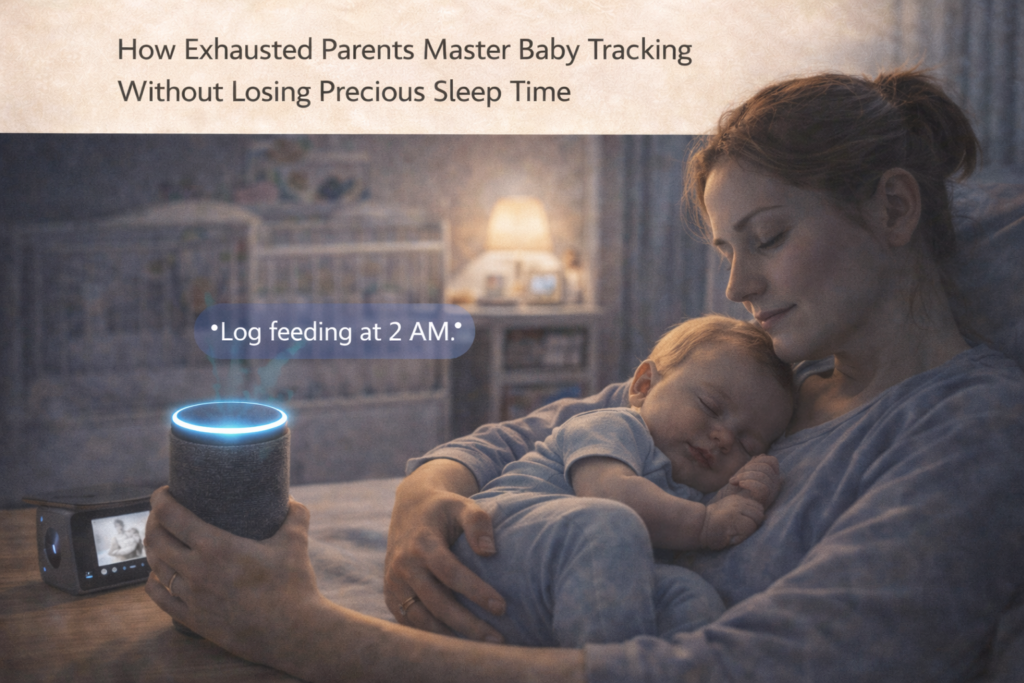
- Voice-first logging lets you speak instead of type, working in the dark while holding a baby.
- AI analyzes trends, generates pediatrician summaries, and facilitates caregiver coordination.
Traditional baby logs demand too much attention during exhausting moments. The goal is pattern recognition, not perfect records. Systems should work in the dark, literally.
Baby tracking apps often add stress instead of reducing it. During a 3 AM feeding, you’re asked to record start time, end time, which side, ounces consumed, diaper status, and notes. The mental load of complete documentation competes with the physical exhaustion of new parenthood.
There’s a way to track development that maintains useful observation without amplifying anxiety.
Why Baby Tracking Apps Add Stress
Most baby tracking tools are built around completeness rather than usefulness. They assume parents want comprehensive logs when what parents actually need is pattern recognition and reassurance.
Too Many Fields During 3 AM Feedings
You’re holding a finally-settled baby. The room is dark. You need to record the feeding, but the app wants precise times, measurements, and categorical selections. Each tap risks fully waking yourself or the baby.
The friction between what the app demands and what the moment allows creates tension.
Guilt Over Incomplete Logs
When tracking feels burdensome, gaps appear. You miss a feeding entry. Skip a diaper change. Forget to log sleep duration. The incomplete record triggers guilt—maybe you’re not tracking well enough, maybe you’re missing important patterns.
This guilt serves no one.
What Actually Needs to Be Tracked
The purpose of baby tracking is pattern recognition, not perfect documentation. Understanding what’s essential helps reduce unnecessary effort.
Essential vs Optional Data
Essential data reveals patterns that affect care decisions. How often does the baby feed? How long do sleep stretches last? Are there changes that might signal illness or development?
Optional data includes precise measurements that don’t change care patterns. Knowing the baby fed at 3:17 AM rather than “around 3 AM” rarely matters.
Pattern-Revealing Minimums
Minimal useful tracking captures frequency and rough timing. Fed baby at night. Baby slept for several hours. Diaper change included unusual output.
These brief notes support pattern recognition without demanding exhausted precision.
Voice-First Baby Logging with AI
Voice input removes most friction from baby tracking. You speak. AI transcribes and structures the information.
Speaking Instead of Typing
In the dark, holding a baby, speaking is far easier than typing. “Fed baby four ounces at 3 AM” takes seconds to say and requires no screen interaction beyond starting the recording.
Voice-first systems work with the physical constraints of infant care.
Automatic Time Stamping and Categorization
AI can handle the administrative overhead. When you say “fed baby four ounces,” the system notes the time automatically, categorizes it as a feeding, and extracts the quantity.
You provide the essential information. AI structures it.
AI Parsing Creates Structured Data
Natural language processing converts spoken notes into database entries. “Baby slept from bedtime until around 2 AM” becomes a structured sleep record with approximate duration.
The structure supports later pattern analysis without requiring structured input during exhausted moments.
How AI Reveals Baby Patterns You’d Miss
Patterns emerge across days and weeks. AI can identify trends that individual entries don’t make obvious.
Sleep Cycle Analysis Without Manual Graphing
AI can track sleep duration over time and notice patterns. Is the baby gradually lengthening nighttime sleep? Are there consistent wake times? Do naps cluster at certain times?
These patterns help parents understand whether sleep is progressing normally or whether adjustments might help.
Feeding Trend Detection
Feeding frequency and amounts shift as babies grow. AI can notice when feedings space out or when intake increases, providing reassurance that development is proceeding typically.
Identifying Potential Issues Early
Significant pattern changes sometimes signal problems worth discussing with a pediatrician. If feeding frequency drops suddenly, or if diaper output decreases, AI can flag these changes for attention.
These flags aren’t medical diagnoses—they’re prompts to notice and verify.
AI-Generated Summaries for Pediatrician Visits
Pediatricians often ask about feeding frequency, sleep patterns, and diaper output over the past week or month. Reconstructing these patterns from memory is difficult.
AI can generate summaries: “Baby averaged 6 feedings per day over the past week, with nighttime feedings spacing out gradually. Sleep stretches have lengthened to 4-5 hours.”
These summaries answer typical questions without requiring manual calculation.
Sharing Data With Partners and Caregivers
Baby care usually involves multiple people. Shared access to tracking information supports coordination.
One Source of Truth
When both parents and caregivers log to the same system, everyone sees current patterns. No one needs to ask when the baby last ate or whether naps happened today.
Shared visibility reduces coordination overhead.
Automatic Handoff Reports
When caregivers change shifts, context matters. What happened during the previous hours affects care decisions.
AI can generate handoff summaries automatically: “Baby fed at 1 PM and 4 PM. Currently due for feeding. Last nap ended 2 hours ago. Diaper changed at 3:30 PM.”
These summaries provide context without requiring detailed verbal handoffs.
AI-Generated Daily Summaries
At the end of each day, a summary shows what happened. How many feedings. Total sleep duration. Diaper changes. Any notable variations from typical patterns.
These summaries help everyone stay aware without constant check-ins.
Making Tracking Sustainable
The best tracking system is the one you actually use. Sustainability matters more than completeness.
Voice-first logging with AI support reduces friction enough to make tracking sustainable during the exhausting newborn period. You capture essential patterns without perfect documentation.
The system works in the dark. It structures information automatically. It reveals patterns you might miss. It generates summaries when you need them.
That combination lets you focus on the baby while still maintaining awareness of patterns that matter for care and development.