
- Daily meal decisions create dozens of food choices weekly, depleting mental energy.
- AI handles inventory matching, preference learning, dietary filtering, grocery lists, and schedule awareness.
- Five distinct AI systems work together to reduce the cognitive load of meal planning.
- The goal is reducing decisions and making meal planning a 15-minute weekly task, not pursuing perfection.
Meal planning fails when it requires sustained creative energy. Decision fatigue around food affects the whole family. The goal is reducing decisions, not achieving gourmet perfection.
Every evening, the question appears: what’s for dinner? On good days, you have a plan. On typical days, you’re mentally scrolling through options while managing homework, activities, and everything else. By the time you settle on something, decision fatigue has already set in.
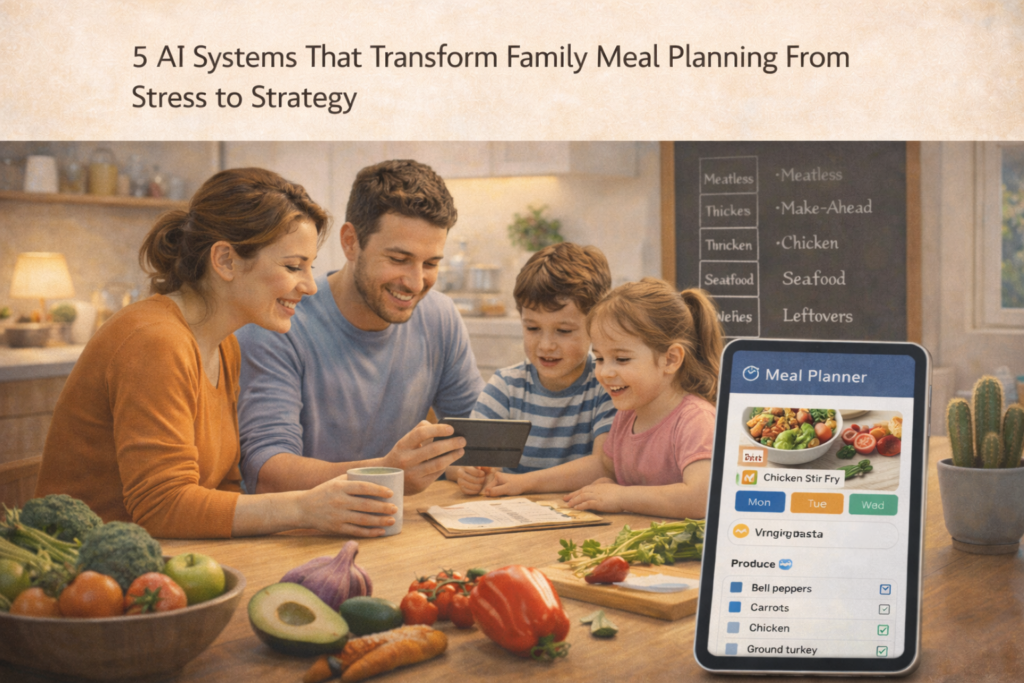
AI can help shift meal planning from daily stress to weekly strategy.
Why Meal Planning Becomes Another Mental Load
Meal planning carries more weight than simply choosing food. It involves nutrition, preferences, time constraints, and the emotional labor of keeping everyone reasonably satisfied.
Daily Decision Fatigue
Deciding what to make for dinner, breakfast, and lunch—plus snacks and school lunches—creates dozens of food decisions each week. Each decision depletes mental energy.
When meal planning happens day by day, the cognitive load never gets lighter.
The Expectation of Variety and Nutrition
Families want both variety and nutrition. Repeating the same meals feels monotonous. Falling back on convenient options triggers guilt about nutrition. Balancing these pressures while managing everything else creates stress.
Creating a Family Meal Foundation
The most effective meal planning builds on rotation basics rather than constantly seeking novelty.
Rotation Basics Instead of New Recipes
Most families can identify 10-15 meals that work reliably. These meals match your family’s preferences, fit typical weeknight time constraints, and use ingredients you know how to prepare.
Starting with this rotation removes the pressure to generate new ideas constantly.
Anchor Meals for Predictable Nights
Some families benefit from anchor meals—predictable patterns like Pasta Monday or Taco Tuesday. These anchors reduce decisions on those specific nights.
Anchor meals work best when they’re genuinely easier, not when they add rigidity to an already-packed schedule.
How AI Transforms Meal Planning
AI can assist with several aspects of meal planning that typically require mental effort.
System 1: Inventory-Based Suggestions
One common source of meal planning friction is the gap between what you want to make and what you actually have available.
AI can analyze your current inventory and suggest meals that match. “You have chicken, broccoli, and rice—here are three options.” This approach works with what you already have rather than requiring a full shopping trip for each meal.
System 2: Learning Family Preferences Over Time
AI can track which meals get positive reception and which ones don’t get finished. Over time, suggestions can favor meals your family actually enjoys.
This learning happens passively. You make notes about whether meals worked well, and AI adjusts future suggestions accordingly.
System 3: Dietary Restriction Filtering
When family members have allergies, sensitivities, or dietary restrictions, every meal decision includes a filtering step. AI can automatically exclude meals that don’t fit requirements.
This filtering happens before suggestions reach you, reducing the cognitive load of manual checking.
System 4: Auto-Generated Grocery Lists
Once meals are selected for the week, AI can generate a grocery list by comparing meal requirements against what you typically keep stocked.
The list consolidates ingredients across multiple meals and removes items you already have, making shopping more efficient.
System 5: Context-Aware Meal Matching
Some nights allow more cooking time. Other nights need 20-minute meals. AI can suggest meals that match the time and energy available on specific days.
This matching considers your calendar, typical energy patterns, and meal complexity without requiring manual filtering.
Flexible Weekly Frameworks Instead of Rigid Plans
Flexible frameworks acknowledge that family schedules shift frequently.
Meal Categories by Night
Instead of assigning specific meals to specific nights, some families assign categories. Monday might be “quick protein and vegetables,” while Saturday is “longer cooking project if interested.”
AI can suggest specific meals within each category based on inventory and preferences.
Swap Options When Life Changes the Plan
When Tuesday’s plan doesn’t happen because of an unexpected schedule change, AI can suggest which other planned meal would work better for Tuesday’s new circumstances and when to reschedule the original meal.
This flexibility reduces the sense of failure when plans change.
AI Rescheduling When Meals Don’t Happen
If a planned meal doesn’t happen, AI can automatically reschedule it or suggest whether ingredients need to be used soon to avoid waste.
This rescheduling happens without manual replanning effort.
Making Meal Planning a 15-Minute Weekly Task
With AI handling the cognitive overhead, meal planning becomes a brief weekly review rather than a sustained effort.
AI Doing the Heavy Lifting
AI generates meal suggestions based on inventory, preferences, dietary needs, and schedule. You review the suggestions rather than generating ideas from scratch.
This shift from creation to approval significantly reduces the mental effort required.
Approving Rather Than Creating
Your role becomes evaluating whether suggestions work for your week. “Yes to Monday and Tuesday, swap Wednesday for something quicker, Thursday looks good.”
Approving takes far less energy than creating.
Building Momentum Through Consistency
When meal planning takes 15 minutes instead of an hour or more, maintaining the habit becomes easier. Consistency builds momentum.
Over time, AI learns more about your preferences and constraints, making suggestions increasingly relevant.
Reducing Decisions, Not Pursuing Perfection
The purpose of AI-assisted meal planning is reducing daily decision fatigue, not achieving culinary excellence.
You’re not aiming for Instagram-worthy meals or perfect nutrition every night. You’re aiming for a system that removes the daily question of “what’s for dinner?” with minimal mental effort.
AI handles inventory matching, preference learning, dietary filtering, list generation, and schedule awareness. You handle final approval and actual cooking.
That division of labor can shift meal planning from stress to strategy, making it a manageable weekly task rather than a daily burden.