
- Traditional milestone tracking emphasizes rigid timelines that invite harmful comparison.
- AI can document developmental progress through voice notes and photos without adding burden.
- Pattern recognition across observations reveals healthy development without judgment.
- The goal is maintaining developmental awareness while celebrating your baby’s unique progression.
Milestone tracking often increases parental anxiety rather than joy. Every baby develops uniquely, but tracking helps identify concerns early. Systems should celebrate progress, not create competition.
Baby milestones come with implicit timelines. Rolling over by four months. Sitting independently by six months. First words around the one-year mark. These guidelines help identify developmental concerns, but they also create opportunities for comparison and worry.
There’s a way to track development that maintains useful observation without amplifying anxiety.
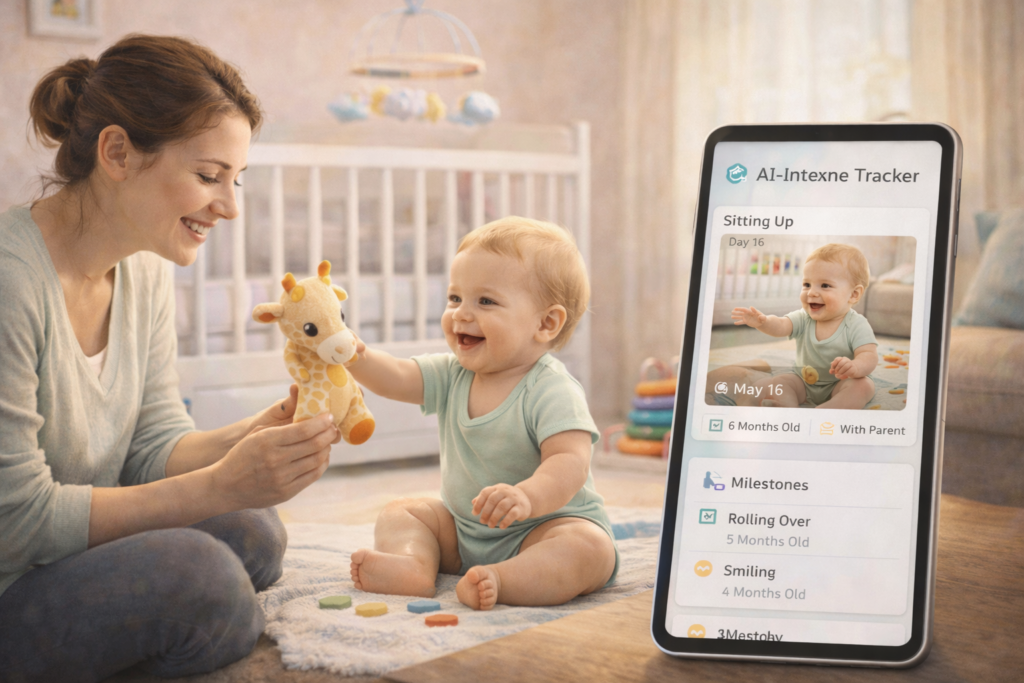
The Problem With Traditional Milestone Tracking
Most milestone tracking tools emphasize timelines and checklists, which can inadvertently increase stress.
Comparison Culture and Parental Stress
When milestone tracking focuses on hitting specific ages, it naturally invites comparison. Your baby hasn’t rolled over yet, but the checklist says most babies do by now. A friend’s baby is already sitting up. The pediatrician asks about specific behaviors.
These comparisons can transform observation into anxiety.
Rigid Timelines vs Developmental Windows
Milestones actually represent developmental windows, not fixed deadlines. Rolling over typically happens between three and six months. Sitting independently usually occurs between four and nine months.
The windows are wide because normal development varies significantly.
Reframing Milestones as Observation, Not Scorecards
Milestone tracking serves a purpose when it supports developmental awareness rather than competitive comparison.
What Tracking Actually Reveals
Tracking reveals patterns over time. Is your baby showing progressive development in multiple areas? Are new skills building on previous ones? Are there areas where development seems stalled or regressing?
These patterns matter more than hitting specific ages.
Patterns Over Single Moments
Any individual milestone matters less than the overall trajectory. If your baby achieves most milestones within typical windows and shows steady progress, that pattern indicates healthy development even if specific milestones arrive at different times than other babies.
AI-Enhanced Milestone Documentation
AI can help capture developmental progress without creating additional documentation burden.
Voice Notes That Become Structured Records
During moments when you notice new behaviors, speaking is easier than typing. “Baby reached for the toy with both hands today” captures an observation without interrupting the moment.
AI can convert these voice notes into structured milestone records automatically.
Photo Integration With Date and Context
Photos naturally document development. The first time sitting up. Reaching for objects. Standing with support. These photos already exist on your phone.
AI can help organize them as milestone documentation by extracting dates and adding context from voice notes or captions.
AI Pattern Recognition Without Judgment
AI can identify developmental patterns across your observations. “Baby is consistently reaching for objects” emerges as a pattern from multiple individual observations.
This pattern recognition happens descriptively, without comparison to other babies.
Developmental Window Context
When milestones are recorded, AI can provide developmental window information: “Most babies begin reaching for objects between four and six months.” This context acknowledges normal variation without creating anxiety about precise timing.
Identifying Genuine Concerns vs Normal Variation
The purpose of milestone tracking is partly to notice when developmental concerns might warrant professional conversation.
AI Flags That Suggest Pediatrician Conversation
AI can identify patterns that might be worth discussing with a pediatrician. If multiple milestones fall significantly outside typical windows, or if previously achieved skills seem to regress, these patterns might warrant attention.
These flags aren’t diagnoses—they’re suggestions to seek professional perspective.
Contextualizing Delays Within Healthy Ranges
Many variations that worry parents fall well within normal ranges. A baby who sits independently at eight months rather than six is developing typically, even though it feels delayed when friends’ babies sat earlier.
AI can provide this context, helping distinguish between normal variation and potential concerns.
Avoiding False Alarms
Just as AI can flag potential concerns, it can also reassure when development is proceeding typically despite feeling delayed. “Your baby is within the normal range for this milestone” provides useful perspective.
Creating a Meaningful Milestone Archive
Milestone documentation becomes more valuable when it captures memories alongside metrics.
Memories Over Metrics
The milestone itself is less interesting than the context around it. First steps matter partly because of when they happened, but more because of how they happened, who was there, and how the baby reacted.
Capturing that context creates meaningful records.
First Attempts, Not Just First Successes
Development happens gradually. Recording only successful milestones misses the progression. The first attempt to roll over, even unsuccessful, shows emerging skill.
AI can help track these attempts as part of developmental patterns, showing progress even before complete success.
AI-Generated Milestone Summaries
For baby books or simply for reflection, AI can generate milestone summaries that capture developmental progression: “Between four and six months, baby progressed from reaching for objects to grasping them consistently, began rolling from back to front, and showed increasing interest in solid foods.”
These summaries tell a developmental story rather than listing isolated dates.
Celebrating Individual Progress Without Comparison
The most useful milestone documentation focuses on your specific baby’s progression. How skills built on each other. What interested them. How their personality emerged through development.
This individual focus supports celebration rather than comparison.
From Anxiety to Celebration
Milestone tracking doesn’t have to create anxiety. When the system focuses on patterns rather than timelines, on observation rather than comparison, and on context rather than checklists, tracking supports confident parenting.
AI can handle the documentation structure, pattern recognition, and developmental context while you focus on actual observation and celebration.
The goal isn’t perfect records or early achievement. The goal is maintaining developmental awareness while celebrating your baby’s unique progression.